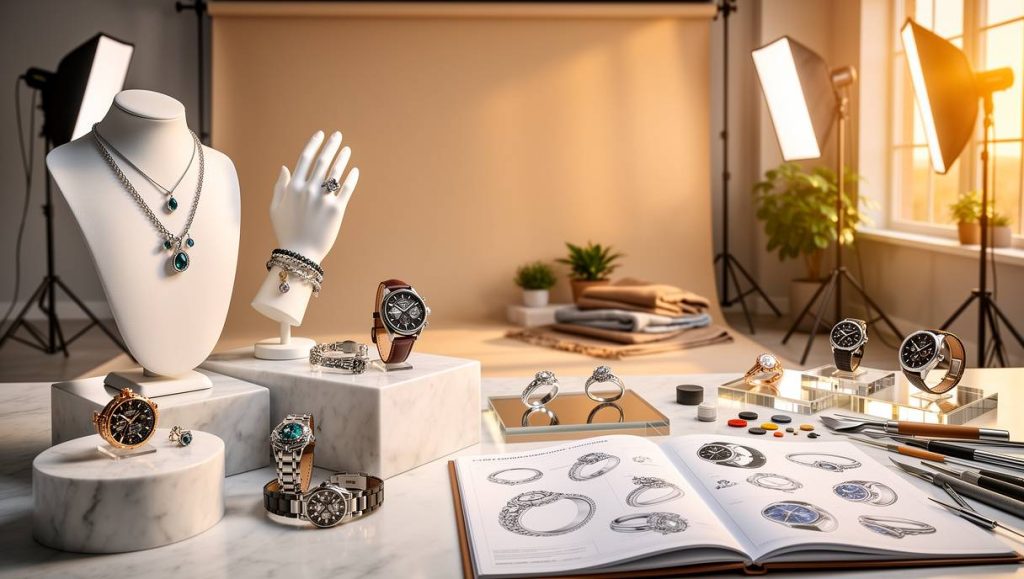

Why exceptional images matter for handmade and high‑end goods
Great products don’t sell themselves online—great visuals do. For artisans, the leap from bench to browser is bridged by studio‑quality imagery that carries the weight of your craft. When a customer can’t touch a ring, feel the heft of a watch, or trace the smooth rim of a ceramic bowl, photographs become the proxy for trust. Strong product photography for artisans captures the micro‑truths: the clean solder on a silver bezel, the bevel on a hand‑cut stone, the weave tension in a leather strap. These are not just details; they are proof of care, and proof converts.
In a feed crowded with trends, handmade pieces win by standing out with clarity and consistency. Color accuracy and texture fidelity matter more for one‑of‑a‑kind and limited‑run items than for mass goods. An image that renders gold as brassy or glaze as flat can undermine perceived value. Think of photography as the handshake your work makes with the world: it should be firm, confident, and unmistakably yours. A consistent visual language—angles, backgrounds, light quality—builds brand memory across your website, marketplaces, and social channels.
For high‑end objects, light is the design partner. Soft, controlled lighting reveals dimension without overpowering it. Diffusion turns specular chaos on polished metal into elegant gradients; controlled reflections sculpt a watch bezel or a lacquer finish into something sculptural and premium. Meanwhile, purposeful shadows add depth and emphasize form. The result is a sense of tactility that prompts the viewer to imagine how the piece feels in hand, on skin, or in motion.
Beyond aesthetics, strategic imagery is a growth engine. Search‑friendly filenames and alt text support discovery. A deliberate mix of packshots, lifestyle scenes, and on‑model imagery nurtures different buyer intents: specification seekers, gift shoppers, and inspiration browsers. For artisans who release small collections or custom commissions, images also serve as an archive and portfolio, creating momentum for future drops and collaborations. With today’s tools, it’s possible to produce this variety at speed while preserving craft integrity—no compromises on quality, no endless reshoots.
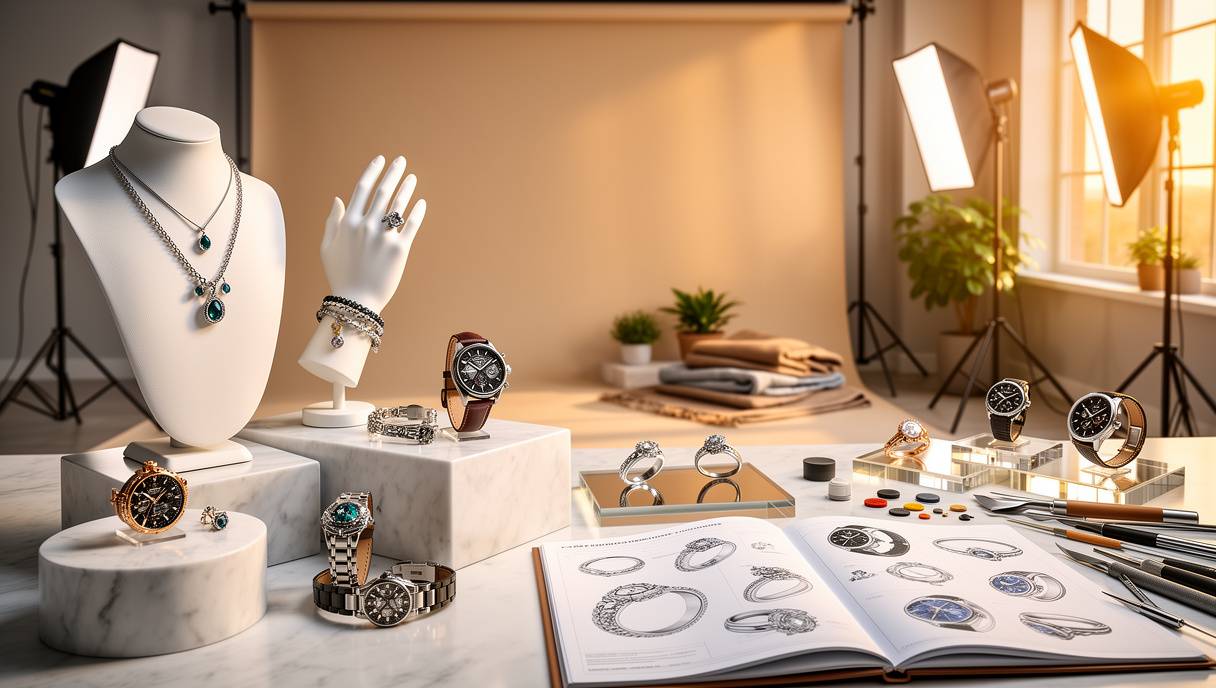
A practical workflow: from craft bench to studio‑quality image
Begin with a clear visual brief. Define the mood and message: minimal and modern, rustic and tactile, or opulent and editorial. Moodboards, color swatches, and a short shot list prevent decision fatigue later. If your work includes multiple finishes or stones, outline the hero angles—front, three‑quarter, macro detail, clasp or hallmark—and the storytelling shots that show the piece worn or in context. Consistency beats complexity; it’s better to master three impeccable angles than to chase twenty uneven ones.
Preparation is part of the image. Clean every surface with lint‑free cloths, handle with gloves, and de‑dust between takes. For metals and watch crystals, a polarizing filter can tame unruly reflections; a soft brush restores a velvet pad to pristine between shots. Stage on matte, non‑reflective backgrounds for packshots: a seamless sweep of light gray or off‑white protects color fidelity better than pure white while still reading cleanly on e‑commerce. Keep props simple and relevant—raw gemstones, tools of the trade, or natural textures—so the product remains the hero.
Lighting should be soft and controllable. A window with sheer diffusion or a softbox provides wraparound light; add white cards or reflectors to open shadows. For jewelry and glossy finishes, position flags (black cards) to shape pleasing edge reflections—these “lines of beauty” make forms pop. Lock down your camera or phone on a tripod, use a remote or timer, and shoot at lower ISO for clean files. Close apertures (f/8–f/16) increase depth of field for small objects; focus stacking helps with extreme macros. A color checker at the start of the set makes later correction precise.
File discipline turns images into assets. Adopt a naming structure that includes collection, finish, angle, and size; export master retouched files alongside web‑ready versions in 2K and 4K to future‑proof your catalog. Ethical retouching preserves truth: remove dust, tame hotspots, align horizons, but avoid altering craftsmanship or misrepresenting scale and color. When time or budget is tight, virtual production can extend your reach. Photorealistic tools now translate sketches or CAD into consistent packshots, generate lifestyle sets that match brand palettes, and place pieces on‑model without fittings. Used well, they help small studios act like big ones—moving faster, testing concepts, and iterating visuals without renting locations or rebuilding sets. For a streamlined approach that keeps control in your hands, platforms dedicated to Product photography for artisans bring a drag‑and‑drop “studio” to the browser, delivering launch‑ready images with minimal friction.
Styling, storytelling, and scaling across e‑commerce and social
A winning image suite balances three pillars: packshots, lifestyle, and on‑model. Packshots on seamless backgrounds handle truth and technical accuracy—dimensions, materials, closures. They’re essential for marketplaces and product detail pages. Aim for uniform horizon lines, matching shadows, and consistent crop ratios so a grid of thumbnails looks intentional. Lifestyle images bring aspiration: a pendant against linen, a watch beside a folded knit, a ceramic mug near morning light. Choose props by affinity—complementary textures and colors that echo your brand’s sensibility without stealing the scene. On‑model shots resolve scale and wearability, especially for earrings, bracelets, and small pendants. For artisans without frequent access to models, arm, neck, or hand crops offer relatability while keeping focus on form.
Every frame should communicate design purpose. Show mechanisms and movement: a clasp mid‑action, a hinge open, a ring in a gentle rotation. For luxurious materials, emphasize transition tones—gradients along metal curves, gemstone scintillation captured via a small controlled light. For matte or organic finishes, celebrate micro‑texture with angled rakes of light. Compose with negative space so captions, price badges, or callouts can live on the image without crowding. Color harmony is vital: craft palettes that align with your seasonal stories and ensure your product remains the highest‑contrast element in the frame.
Scaling content across platforms requires intent. Etsy and Shopify thrive on clear main images and supplementary angles; Instagram rewards motion (short clips, 360 loops) and mood; Pinterest favors tall crops and narrative sequences; email needs high‑impact hero images at small file sizes. Build a master image, then adapt crops, aspect ratios, and overlays per channel. Template systems, batch exports, and style presets keep output efficient and maintain a consistent visual fingerprint. As your catalog grows, create a shot library organized by product family, finish, and use case, so you can assemble campaigns quickly without reinventing the wheel each time.
Storytelling is also operational. Plan micro‑campaigns around making‑of moments: a wax model beside the final cast, a sketch next to the finished brooch, a glaze test tile near the production piece. These pairings foster credibility and invite collectors into the process—a powerful differentiator for artisanal brands. When resources are lean, AI‑assisted staging can help produce cohesive lifestyle sets that match your brand’s materials and color values, enabling rapid testing of seasonal looks or new markets without travel or prop budgets. The key is control: lock in angle standards, lighting profiles, and color references so images generated at different times still feel cut from the same cloth. Over time, the combination of precise packshots, evocative lifestyle scenes, and honest on‑model portrayals builds a visual story that not only earns clicks but also reduces returns, because what customers see is what they get—crafted, considered, and beautifully shown.

Cairo-born, Barcelona-based urban planner. Amina explains smart-city sensors, reviews Spanish graphic novels, and shares Middle-Eastern vegan recipes. She paints Arabic calligraphy murals on weekends and has cycled the entire Catalan coast.
