
The United Kingdom is home to more than 5 million registered companies, a dynamic and constantly evolving commercial landscape that generates an immense volume of official filings each day. While Companies House remains the definitive public register, extracting real-time insight from raw filings is a challenge that manual searches and static downloads can no longer solve. A UK company data API bridges this gap, turning fragmented public data into structured, machine-readable intelligence that powers sales automation, compliance checks, market analysis, and risk scoring. Rather than simply mirroring the Companies House website, modern APIs enrich, standardise, and deliver company profiles instantly, enabling software platforms and business teams to build smarter workflows around live business information.
What Is a UK Company Data API and How Does It Work?
At its core, a UK company data API is a programmable interface that lets applications retrieve, search, and monitor information about British businesses directly from a trusted data provider. Instead of logging into a web portal and reading HTML pages, developers send structured queries — often using a simple REST architecture — and receive clean JSON or XML responses packed with company details. A typical request might look up a company by registration number, company name, or even a director’s name, and the API returns a profile containing the registered office address, company status, incorporation date, SIC codes, filing history, officers, persons with significant control, and sometimes financial highlights or credit-risk indicators.
Behind the scenes, the API provider constantly harvests and reconciles data from Companies House and other official sources, transforming millions of events — new incorporations, change of directors, confirmation statements, accounts filings — into a unified, queryable dataset. This process involves data normalisation, which cleans inconsistencies in addresses and entity names, and change detection, which identifies what has been updated since the last request. Many advanced APIs also layer on proprietary enrichment, such as industry classification, estimated turnover bands, website domains, or merged records that connect a company’s UK entity with its European parent.
The interaction model generally falls into two patterns: real-time lookup for on-demand verification, and bulk or batch access for overnight enrichment of large databases. Real-time endpoints are essential for onboarding flows, where a platform must validate a supplier’s active status before allowing registration. Batch endpoints, meanwhile, let a marketing team re-fresh 100,000 CRM records with the latest address, SIC code, and dissolution flag. The best APIs offer webhook notifications or event streams so that when a monitored company files new accounts or appoints a new director, the subscribing system is alerted instantly. Security is handled through API keys or OAuth tokens, and usage is typically metered by call volume, with generous free tiers for development and higher-capacity plans for production.
What distinguishes a genuinely useful UK company data API from a simple scraper is its commitment to data freshness and completeness. Companies House publishes filings almost in real time, but retrieving them through a manual interface introduces latency. A mature API absorbs updates within minutes, so a risk engine checking a prospective customer always sees the most current ownership structure. Moreover, a well-designed API exposes filters that go far beyond the basic search; users can query by location radius, company age, active directors count, or even recent filing events, making it a powerful tool for building targeted prospecting lists or identifying early signs of distress in a supply chain.
Why Modern Businesses Rely on UK Company Data APIs
Businesses across sectors — from nimble fintech startups to global insurance carriers — are moving away from ad-hoc manual checks and spreadsheet imports toward embedded, API-driven data flows. The driver is simple: speed, accuracy, and the ability to automate compliance processes that would otherwise consume hours of human effort. When a lending platform underwrites a small business loan, it cannot afford to wait for a team member to navigate Companies House, copy data into a form, and then manually cross-check it against sanctions lists. A UK company data API reduces that workflow to a single sub-second API call that returns the company’s legal name, registered address, director list, and filing status, all stamped with the time of retrieval for audit purposes.
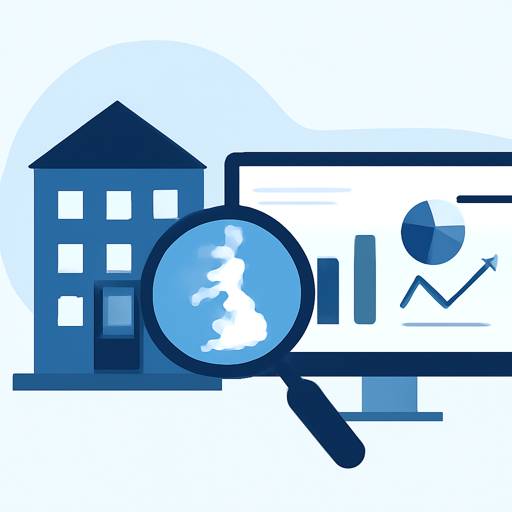
Beyond pure efficiency, these APIs unlock new capabilities that static registers cannot offer. For example, sales and marketing teams use the API to build hyper-granular prospect lists by filtering companies on SIC codes, incorporation date, and location — criteria that would be impossible to combine through a website search. An outbound campaign targeting recently incorporated e-commerce firms in Manchester becomes a matter of adjusting a few query parameters rather than days of data wrestling. Similarly, procurement departments monitor the health of critical suppliers by watching for events like a notice of compulsory strike-off, a change in registered office to a virtual address, or a sudden filing of mortgage charges. The API surfaces these red flags early, helping businesses mitigate supply chain disruption before it becomes a crisis.
The compliance burden is another major force behind API adoption. Anti-money laundering regulations, know-your-customer requirements, and the Economic Crime (Transparency and Enforcement) Act 2022 all demand that firms verify the identity and ownership structure of UK entities. An API endpoint that delivers persons with significant control data in real time allows a compliance officer to instantly confirm the ultimate beneficial owners and check them against politically exposed persons databases. For organisations operating across borders, the challenge is even more complex, because a UK supplier may be part of a European group whose holding company is registered in a different jurisdiction. In these scenarios, a UK company data API that forms part of a wider European business data platform becomes invaluable, enabling one integration to surface not just Companies House data but also linked records from other EU registries. This cross-border visibility eliminates the need to stitch together multiple APIs, each with its own schema and authentication method.
Data enrichment is the final piece of the puzzle. Raw Companies House data, while authoritative, is often sparse: it tells you a company’s legal name but not its trading name, its SIC code but not a human-readable industry, its filing dates but not its financial health. A commercially robust UK company data API overlays these fundamentals with additional intelligence — website URLs, telephone numbers sourced from public directories, credit score estimates, and sometimes even employee count ranges or technology stack signals derived from web crawling. For a CRM system, this means a lead record that arrives with a bare company name can be automatically enriched with a logo, industry tag, head office address, and a link to the latest accounts, all before a sales representative ever picks up the phone. The result is a single source of truth that connects marketing, sales, risk, and procurement teams, all fed by the same continuously updated API stream.
Real-World Applications: How Teams Leverage UK Company Data APIs
The true versatility of a UK company data API emerges when it is embedded inside specific business workflows. Consider a European insurance company that underwrites trade credit policies for exporters. Before quoting a premium, its underwriting engine pulls a live company profile from the API, inspects the filing history for any signs of late accounts or auditor resignations, and checks the PSC register to ensure the entity is not owned by a sanctioned individual. This automated pre-check takes less than a second, yet it replaces what was once a multi-day manual process involving analysts in multiple countries. Because the API delivers standardised data, the insurer applies the same risk rules to a family-run haulage company in Birmingham as it does to a biotech laboratory in Heidelberg, levelling the playing field for smaller importers across Europe.
In the marketing technology space, a UK company data API powers account-based marketing campaigns with surgical precision. A B2B software vendor wanting to target fintech firms that have raised equity funding in the last eighteen months can use the API to filter for companies with newly issued share capital statements, refine by SIC codes related to software development, and then enrich each matching record with a domain and a LinkedIn company page URL. The enriched list is pushed into a customer data platform, triggering personalised advertising and outbound email sequences. When the API signals that a target company has recently appointed a new Chief Technology Officer, the sequence adapts, sending a message that addresses the specific challenges a new technology leader typically faces. This real-time reactivity simply is not possible with static list uploads.
Compliance departments, too, have transformed their operations using automated company data. A large UK-based bank integrated a company data API into its client onboarding portal. When a corporate customer enters its company number, the portal fetches the full registered details, cross-references directors against an internal watchlist, and calculates a risk score based on factors like jurisdiction of incorporation and the presence of bearer shares. If the API returns a red flag — for example, the entity has a notice of compulsory strike-off — the workflow automatically routes the application for enhanced due diligence. The same integration also keeps client records up to date post-onboarding; every time a customer files a change of address, the API notifies the bank’s core system, ensuring that legal correspondence always reaches the correct registered office.
Even beyond financial services, the public sector and research institutions are embracing API-driven company intelligence. Universities studying the impact of the UK’s departure from the European Union use a UK company data API to monitor the formation and dissolution rates of businesses in export-oriented sectors like food manufacturing and logistics. By pulling weekly snapshots of incorporations filtered by SIC code, they can build leading indicators of economic sentiment that are far more timely than quarterly government statistics. Similarly, local enterprise partnerships embed the API in their grant management software, automatically verifying that applicants are active companies with a registered address within the region, slashing the administrative burden on both the applicants and the adjudicators. In every case, the common thread is the same: a reliable stream of structured, up-to-date company data replaces manual drudgery, reduces error, and frees knowledge workers to focus on analysis and decision-making rather than data gathering.

Cairo-born, Barcelona-based urban planner. Amina explains smart-city sensors, reviews Spanish graphic novels, and shares Middle-Eastern vegan recipes. She paints Arabic calligraphy murals on weekends and has cycled the entire Catalan coast.
