Understanding the Fundamentals of Microvolume Spectrophotometry
In today’s fast-paced life science and biochemical laboratories, the ability to analyze precious, low-volume samples without dilution is no longer a luxury—it is a necessity. The microvolume spectrophotometer has emerged as a cornerstone of modern spectroscopy, enabling researchers to accurately quantify nucleic acids, proteins, and other biomolecules using sample volumes as small as 0.5–2 microliters. Unlike traditional cuvette-based spectrophotometers that require sample volumes in the range of hundreds of microliters and are prone to cross-contamination or cuvette-handling errors, microvolume systems have completely transformed the analytical workflow.
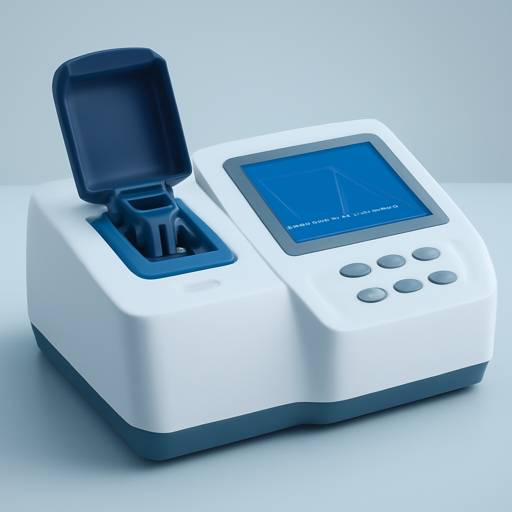
At the heart of a microvolume spectrophotometer lies an innovative sample retention system, often based on surface tension between two optical surfaces. A small droplet of sample is pipetted directly onto a measurement pedestal, and a second surface is brought into close proximity, creating a liquid column that acts as the optical path. The instrument precisely controls the pathlength—typically 1 mm, 0.2 mm, or even down to 0.05 mm—by adjusting the distance between the two surfaces. This allows direct absorbance measurements even for highly concentrated samples without requiring dilution, effectively eliminating a major source of pipetting error and sample loss. The automatic pathlength adjustment and normalization to a standard 10 mm pathlength equivalent mean that researchers can obtain highly reproducible results across a wide dynamic range, from a few nanograms per microliter up to several thousand.
The principle of UV/Vis spectroscopy remains the same as in conventional systems: light passes through the sample, and the amount absorbed is measured at specific wavelengths. For nucleic acid quantification, the absorbance at 260 nm is recorded, while protein concentration is determined at 280 nm, and purity ratios such as A260/A280 and A260/A230 give immediate insight into sample quality. However, because the microvolume approach uses such vastly reduced sample quantities, it dramatically conserves rare clinical specimens, reduces the cost of expensive reagents, and speeds up high-throughput workflows. Researchers working with limited biological material—for example, from single-cell genomics, laser-microdissected tissues, or precious archaeological samples—gain the ability to measure concentration directly without sacrificing valuable sample for a cuvette.
Modern microvolume spectroscopy instruments often feature dual-mode operation, combining a compact pedestal for microvolume work with a traditional cuvette port for kinetic studies, cell density measurements, or applications requiring temperature control. This flexibility makes a microvolume spectrophotometer an all-in-one solution capable of covering everything from quick spot measurements of PCR fragments to comprehensive enzyme kinetic assays. With fast measurement times—often under a few seconds per sample—and simple wipe-clean maintenance, these devices have become indispensable tools in molecular biology, pharmaceutical quality control, and environmental monitoring. The integration of intuitive software that guides users through measurement and automatically saves data further reduces operator variability, bringing a level of precision and confidence that was previously difficult to achieve with limited sample volumes.
Key Applications Transforming Life Science Workflows
The impact of the microvolume spectrophotometer on life science workflows cannot be overstated. Its most ubiquitous application is in the quantification of nucleic acids after extraction. Whether isolating genomic DNA from blood, purifying plasmid DNA from bacterial cultures, or preparing RNA for next-generation sequencing libraries, accurate determination of concentration and purity is the critical first step. A microvolume approach not only spares precious eluate but also enables immediate quality control without waste. When a lab technician in a busy genomics facility loads 0.7 µL of DNA onto the pedestal, the instrument instantly provides a full absorbance spectrum and the calculated concentration, A260/A280 ratio, and A260/A230 ratio. This real-time feedback allows scientists to decide immediately whether the sample meets the necessary quality thresholds for downstream applications such as PCR, qPCR, droplet digital PCR, or sequencing.
Protein research is another domain radically enhanced by microvolume spectrophotometry. The determination of protein concentration using Bradford, BCA, or Lowry assays can be performed on sub-microliter volumes, saving valuable protein for crystallography trials or functional studies. Direct UV absorbance measurements at 280 nm based on tryptophan and tyrosine content can be completed in seconds, and with built-in extinction coefficient libraries, the microvolume spectrophotometer automatically calculates molar concentration. The ability to measure entire absorbance profiles from 200 nm to 850 nm also allows researchers to detect contaminants such as phenol, guanidine, or residual extraction reagents that can interfere with downstream enzymatic reactions, thus preventing costly experimental failure.
Beyond basic quantification, microvolume technology is widely adopted for dye-labeled biomolecule analysis. Scientists working with fluorescently labeled antibodies, oligonucleotide probes, or FISH-labeled DNA routinely use a microvolume system to measure the degree of labeling. By measuring absorbance at both the nucleic acid or protein peak and the dye’s characteristic wavelength, the instrument can calculate dye-to-biomolecule ratios. This capability eliminates the need for separate, high-volume spectrophotometric methods and keeps the entire quality control process streamlined and integrated. In pharmaceutical laboratories, the same instrument might be used for checking the purity of synthetic peptides or small molecules, verifying UV spectra of drug candidates, and ensuring batch-to-batch consistency in very small reaction volumes.
Consider a real-world scenario from a research institute in Munich, Germany—a hub for precision engineering and life science innovation. A team studying rare metabolic disorders extracts total RNA from microdissected liver biopsies, yielding only 3 µL of final sample. Using a high-precision microvolume Spectrophotometer, a technician can measure the full UV spectrum twice, with a mere 0.7 µL per measurement, leaving enough RNA for subsequent cDNA synthesis and qPCR analysis. The instrument’s automatic pathlength adjustment accurately quantifies the RNA without dilution, while the purity ratios confirm the absence of protein and solvent contamination. This seamless workflow is supported by the instrument’s global service footprint: if a calibration query arises, expert support is available not just from the Munich headquarters but also from offices in the United States and China, ensuring minimal downtime. Such responsive support networks are vital when irreplaceable clinical samples are at stake.
Choosing the Right Microvolume Spectrophotometer for Your Laboratory
Selecting the ideal microvolume spectrophotometer for a busy laboratory environment requires careful evaluation of performance, versatility, and long-term reliability. The first criterion is optical accuracy and dynamic range. High-quality instruments employ a precision optics bench with a xenon flash lamp or pulsed LED light source that delivers stable, full-spectrum data without the warm-up time associated with deuterium lamps. A wide absorbance range—typically 0.02 to 375 A—ensures that both dilute and highly concentrated samples can be measured without error. The ability to automatically switch pathlengths in real time, while maintaining linearity and wavelength accuracy (often ±1 nm or better), is a hallmark of top-tier microvolume spectrophotometer systems. For laboratories measuring nucleic acids with concentrations ranging from single-cell genome amplification products to high-copy plasmid preps, this versatility is non-negotiable.
Equally important is the ease of use and contamination-free operation. The pedestal design should allow a simple pipetting step followed by an arm or lever that forms the controlled optical path. The surfaces in contact with the sample must be highly chemically resistant and easy to clean with a dry laboratory wipe, even when working with sticky solutions such as protein lysates or high-salt buffers. A key advantage of a well-designed microvolume spectrophotometer is that it requires no cuvettes, no disposable tips beyond a standard pipette, and no recalibration between measurements. Integration with laboratory information management systems (LIMS) via Ethernet or USB and compliance with 21 CFR Part 11 for regulated environments extend the instrument’s utility into pharmaceutical and diagnostic settings. A compact footprint that saves precious bench space is another practical benefit that many lab managers prioritize.
The decision to invest in a microvolume spectrophotometer should also factor in the quality of manufacturer support and the instrument’s longevity. A device that is engineered and assembled with German precision, and backed by a globally distributed technical service team, offers confidence that goes beyond the initial purchase. For instance, instruments designed by companies with a deep heritage in UV/Vis spectroscopy, such as those developed in Munich and supported through offices in North America and Asia, deliver not only robust hardware but also a knowledgeable service infrastructure. If a laboratory in Boston encounters an unexpected error during a time-sensitive project, immediate assistance from a local support center in Westlake Village, USA, can mean the difference between a minor delay and a failed experiment. Similarly, a customer in Beijing benefits from localized training and support, ensuring that every team member can operate the system with minimal learning curve.
Real-world experience shows that the most successful deployments of microvolume spectrophotometers occur when the instrument is seen not as a standalone gadget but as an integrated partner in research productivity. Customizable software that includes pre-programmed methods for common templates—dsDNA, ssDNA, RNA, protein A280, Bradford assays, and custom dye quantification—reduces operator training time and standardizes results across multiple users. Features such as onboard data storage, automatic export, and one-click spectral analysis empower researchers to focus on their scientific questions rather than on instrument operation. The ability to seamlessly switch to a cuvette mode for OD600 measurements or kinetic absorbance assays further future-proofs the investment, ensuring the same device can adapt as the laboratory’s needs evolve. By carefully weighing these factors, any laboratory can select a microvolume spectrophotometer that not only meets today’s demands but also scales with tomorrow’s discoveries, transforming the simple act of measuring concentration into a pillar of experimental accuracy and reproducibility.

Cairo-born, Barcelona-based urban planner. Amina explains smart-city sensors, reviews Spanish graphic novels, and shares Middle-Eastern vegan recipes. She paints Arabic calligraphy murals on weekends and has cycled the entire Catalan coast.